Most venue inquiry forms were designed by someone reasonable trying to solve a reasonable problem: the sales team kept getting inquiries without enough information to respond.
So they added fields. Event type. Guest count. Date. Alternate date. Budget. How did you hear about us. Company. Title. Referral source. A required message field. A checkbox.
It worked, in the sense that the inquiries that arrive now have more information in them. It failed, in the sense that fewer of them arrive.
The abandonment is not random.
The person who fills out a fourteen-field form is often the person who is early, unqualified, or comparison-shopping with nothing better to do. The person planning a real event, on a real deadline, from a phone, at 10pm, quits at field six and calls somewhere else.
You built a filter and it is filtering in the wrong direction.
The information your team needs is real. The mistake is trying to collect all of it before the conversation starts.
Ask for the minimum required to begin: a way to reach them, and roughly what they want. Everything else is a question you can ask in the conversation, where asking is natural, where they can answer one thing at a time, and where they can ask you something back.
A form is a transaction. A conversation is a relationship. You are in the relationship business.
The single highest-leverage change most venues can make to their form is making the mobile number a real field with a real reason attached.
Email is where your reply goes to die. It arrives in a promotions tab next to nine other venues. Text arrives on the device the person is holding, and it gets read within minutes.
Pew Research Center measured it: over one week, 97 percent of smartphone owners used text messaging, more than any other feature on the phone.
In our 2026 study, every one of the 655 first human replies we received came by email, even though every inquiry included a working mobile number.
If you are going to ask for one contact method, ask for the one that works.
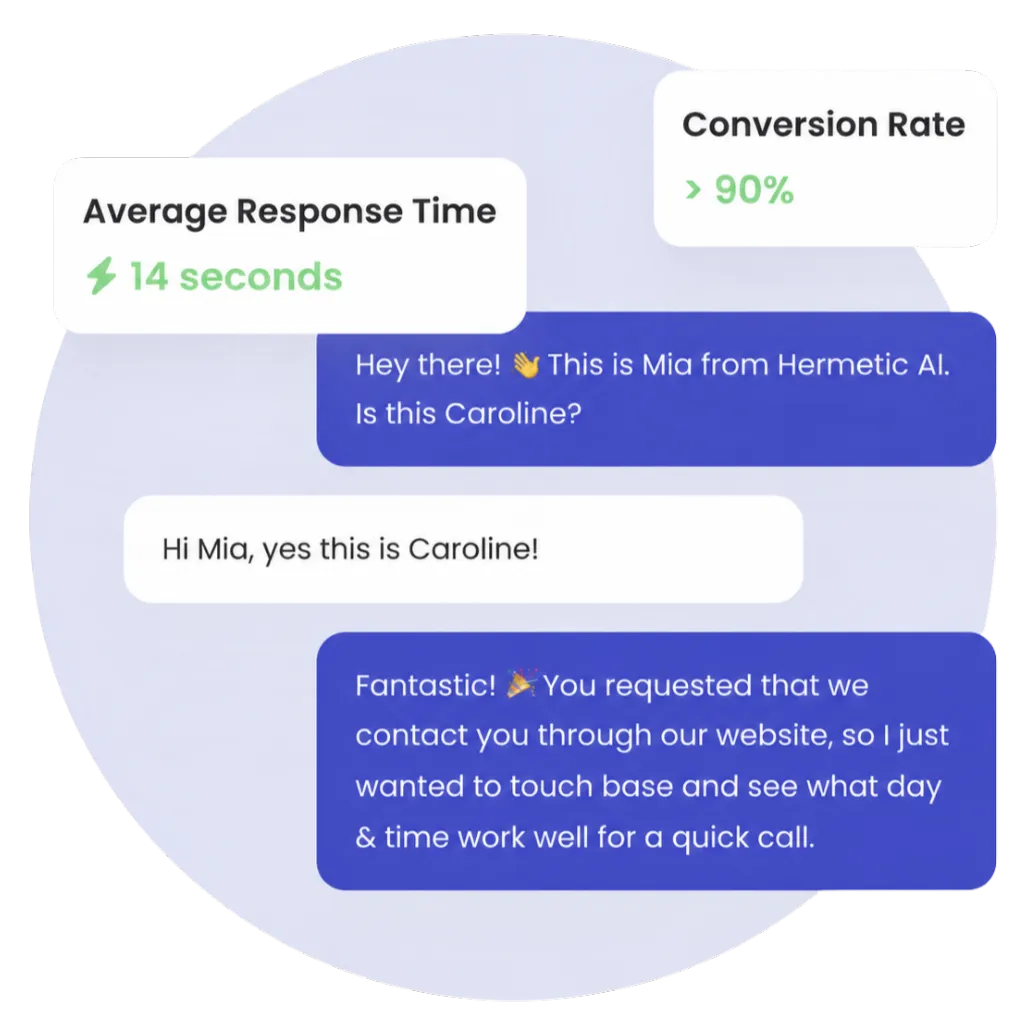
Mia does the qualification that your form was trying to do, except she does it after the person has already committed, in a channel they are already in, and she can ask follow-up questions the form could never anticipate.
Group size, date flexibility, budget, occasion, decision timeline, and the thing you did not know to ask about all come out of a two-minute exchange that feels like service instead of paperwork.
Open your own inquiry form on your phone. Fill it out as a stranger would, on a Tuesday night, one-handed.
If you get impatient, they got impatient. They just did not tell you.
This article is part of our guide to Lead Response Automation: answering every inquiry and following up every time. See also AI Lead Qualification.