Country clubs sell something that's almost impossible to price: belonging. The path from "I'm interested" to "I'm sponsored, approved, and toasting at the welcome dinner" is six conversations long, and every single one of them is mediated by your membership director — who is also handling renewals, the holiday gala, the locker reassignments, and the four members who are unhappy about something the green superintendent did.
The result is what every membership director knows in their bones: the prospect who reached out enthusiastically last Tuesday and got a reply twelve days later is no longer enthusiastic.
Twelve days is worse than it sounds. Harvard Business Review found that firms which reached a web lead within an hour were more than 60 times as likely to qualify it as those that waited a day or longer.
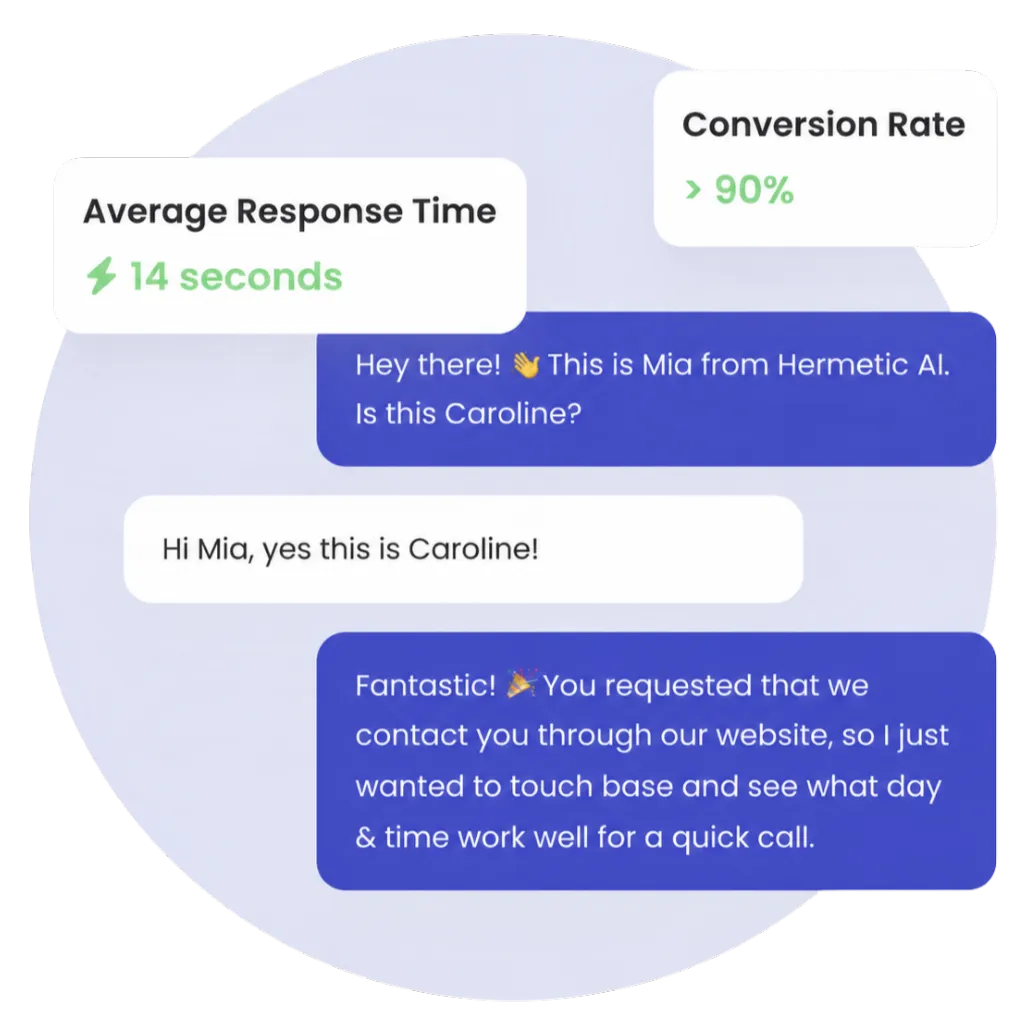
Mia is built to live in front of that gap.
She introduces herself the moment the inquiry arrives. She handles the questions that don't require discretion — initiation tiers (in general terms), family memberships, golf vs. social vs. junior, sponsor protocol. She gathers what your director needs to know before the first real conversation: residency, sponsor status, what brought them in, who in their network is already a member.
What she will not do is initiate the application interview, discuss specific assessments, or pre-commit to anything that should come from your membership committee. Mia knows where the rope line is.
The result is a membership director who only spends time with prospects who have cleared discovery — and prospects who feel attended to from minute one of a process that, until the application, can feel uncomfortably opaque.
Belonging is hard to sell. It is harder to sell when the first thing the prospect feels is ignored.
This article is part of our guide to Hospitality Event Sales: how event leads work and how venues convert more of them.