A twelve-location restaurant group has one brand, one website, one Instagram account, and twelve completely different answers to the question "can you host 40 people on a Thursday?"
Location four replies in eleven minutes with a PDF. Location seven replies in three days. Location nine does not reply, because the GM who used to handle private events left in March and nobody reassigned the inbox.
That spread is typical. In our 2026 study, the median gap between a group's fastest and slowest location was 24.6 hours, and multi-unit brands took roughly three times as long to reply as single-location venues.
The individual numbers matter as much as the spread. Harvard Business Review found that a reply within an hour made a firm nearly seven times as likely to qualify a lead as a reply even an hour later. Location seven's three days is not a slower version of location four. It is a different business.
The guest does not know any of this. The guest thinks they are talking to a company.
Most groups assume the fix is more people or a better inbox tool. It is neither. The problem is that inbound event demand arrives at the brand level and gets resolved at the unit level, and there is no layer in between.
Corporate marketing spends money driving inquiries. Unit-level operators absorb those inquiries between a lunch rush and a liquor delivery. Nobody owns the space where the money actually leaks.
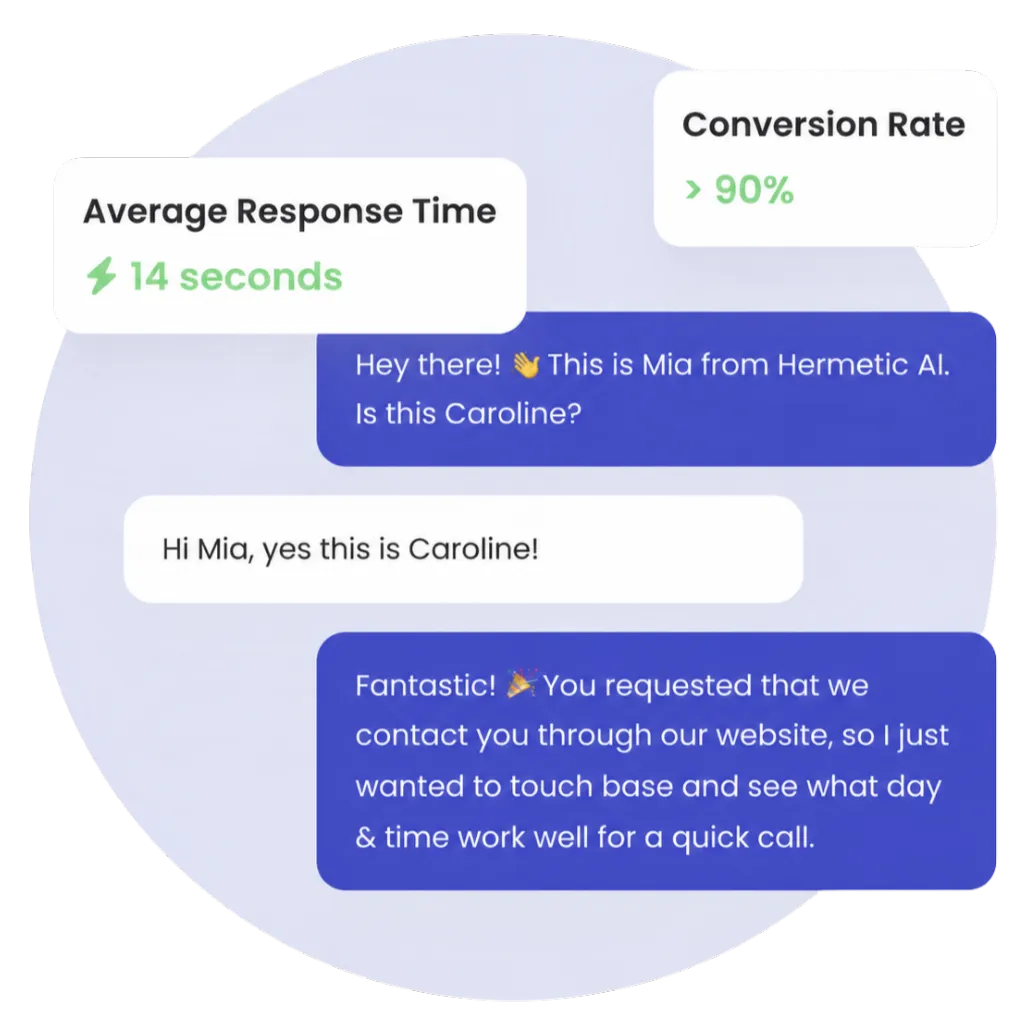
Mia sits in that space. She engages every inquiry across every location within seconds, in the brand's voice, then routes based on what the inquiry actually is.
A 40-top on a Thursday at a location with a private room goes to that location's event lead with the date, headcount, and budget range already captured. A 200-person holiday party that no single location can hold gets routed to whoever at the group handles buyouts, with the alternative locations already surfaced. An inquiry for a location that is fully committed does not die. It gets offered the sister property nine blocks away.
That last one is the whole argument for doing this at the group level. A single-unit operator loses the booking. A group loses it to itself.
The reason multi-unit brands standardize their menus, their glassware, and their training is that consistency is what a brand is. Response time is the one guest-facing experience most groups have never standardized.
Mia makes the first ninety seconds identical at every location. What happens after that is still your team, your judgment, your relationship. But the door opens the same way everywhere.
Once every location's inbound flows through one layer, a question that used to be unanswerable becomes trivial: which locations are actually generating event demand, and which ones are generating it and losing it?
Most groups discover that their worst-converting location is not their worst location. It is their busiest one.
For the single-location version of this playbook, start with AI agents for restaurants, or see the restaurants overview. Running a group? See Mia work a multi-location inquiry live.
This article is part of our guide to Hospitality Event Sales: how event leads work and how venues convert more of them.