People assume the difficult part of deploying an AI agent is the AI. It is not. The models are good.
The difficult part is that answering a guest's question about your venue accurately requires knowing several dozen things about your venue, and at most venues those things have never been written down in one place.
Ask your best event sales manager what the food and beverage minimum is for a Friday in October, and they will answer instantly. Ask them where that is documented and they will point at their own head.
The same is true of whether you allow outside cake, whether the patio counts toward capacity, what the rain plan actually is, which caterers are approved, how late music can go, whether the room can be split, what the deposit schedule is, when the final headcount is due, and what you do when a client wants to bring their own DJ.
That knowledge is the venue. And it exists in one or two people who are not always reachable and who will not always work there.
Here is the part operators do not expect. The exercise of documenting your venue for an AI agent is valuable even before the agent runs.
Every venue that goes through it finds contradictions. Two different minimums on two different documents. A policy the website states and the team has not followed in two years. A capacity number that predates the renovation. Pricing that three people quote three different ways.
Those contradictions have been costing you money in human conversations the entire time. You just never saw them side by side.
In practice, a venue knowledge base breaks into four buckets.
Facts. Capacities, hours, square footage, addresses, parking, what is included.
Rules. Minimums, deposits, cancellation terms, vendor policies, noise limits, age restrictions, what is not allowed.
Judgment. The things that depend. When you flex the minimum. When you take a same-day. When you say yes to something outside policy.
Escalation. What the agent must never answer alone.
The first two are what an AI handles. The third and fourth are what it routes to you. Getting the boundary right between them is the actual configuration work.
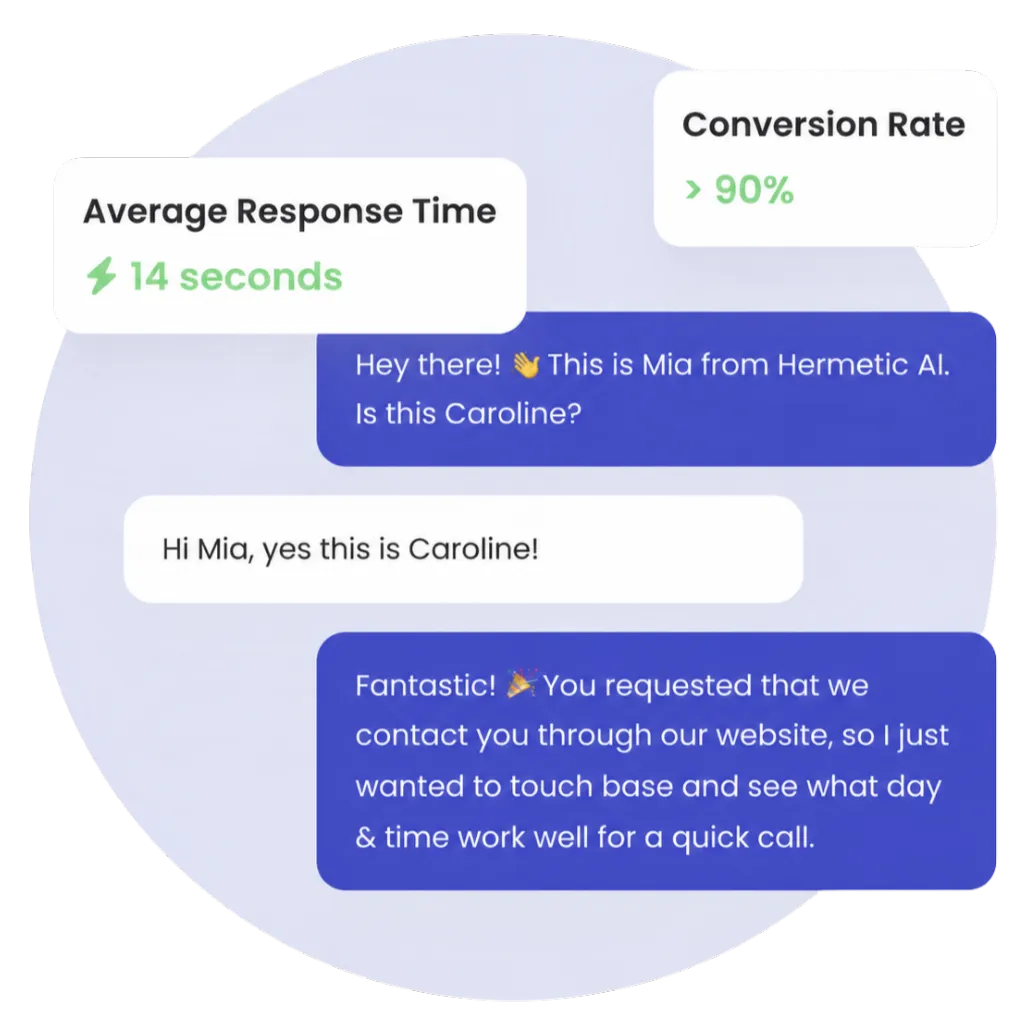
Mia answers from your documented reality and nothing else. When the answer is not in there, she does not improvise. She says she will confirm and brings in a person.
Accuracy is not a nicety. In a Texas A&M study published in the International Journal of Hospitality Management, inaccurate or unreliable answers were the single strongest driver of discomfort with hospitality chatbots, and that discomfort nearly doubled the odds that a guest abandoned the booking.
That constraint is not a limitation. It is the entire reason a guest can trust an answer, and the reason your team can trust the agent talking to guests in the first place.
An AI agent that knows your venue. And, more durably, a venue whose knowledge no longer walks out the door when somebody gives notice.
This article is part of our guide to AI Sales Agents: what an inbound AI sales agent does and how to evaluate one.