Almost every event venue sells to two distinct buyers, and the difference between them is not budget. It is what they are actually purchasing.
The corporate planner is buying a defensible decision. The social planner is buying a feeling.
Everything about how you should talk to each of them follows from that.
The person booking a sales kickoff, a client dinner, a board offsite, or a holiday party is not the person who will enjoy it. They are the person who will be blamed if it goes badly.
They want specificity, speed, and proof that nothing will surprise them. They want the capacity number, the minimum, the AV situation, the parking, the contract terms, and confirmation you have done this before.
They are frequently on a deadline set by somebody above them. They will choose the venue that made them feel organized over the venue that made them feel inspired, every time.
The corporate side has numbers. In Cvent's 2026 Global Planner Sourcing Report, 96 percent of the 1,650 planners surveyed use online RFP tools, four business days is their expected turnaround, and 24 percent call slow replies one of the most frustrating parts of sourcing.
The person booking a wedding, a milestone birthday, an anniversary, or a celebration of life is buying something they will remember for the rest of their life.
They want to feel understood. They want to know that you get what this is. Price matters, but it is not the frame. The frame is whether the day will feel the way they imagined it.
The social side is bigger than it looks. The Knot Worldwide's 2026 Real Weddings Study of 10,474 couples put the average wedding at $34,000 and 117 guests, and in The Knot Real Weddings 2025 Venue Report, 82 percent of couples hired their venue before any other vendor.
Send this buyer a capacity chart and a minimum and you have told them you are not paying attention.
Most venues have one inquiry response, and it is calibrated to whichever buyer they see more of.
Wedding-heavy venues send warm, emotional replies to corporate planners who wanted a floor plan and a number. Corporate-heavy venues send efficient, transactional replies to a couple who just got engaged. Both feel like being handed the wrong menu.
The signal is usually right there in the first message. Occasion, language, whether they mention a company, whether they say "we" as a couple or "we" as an organization, whether they lead with a date or lead with a story.
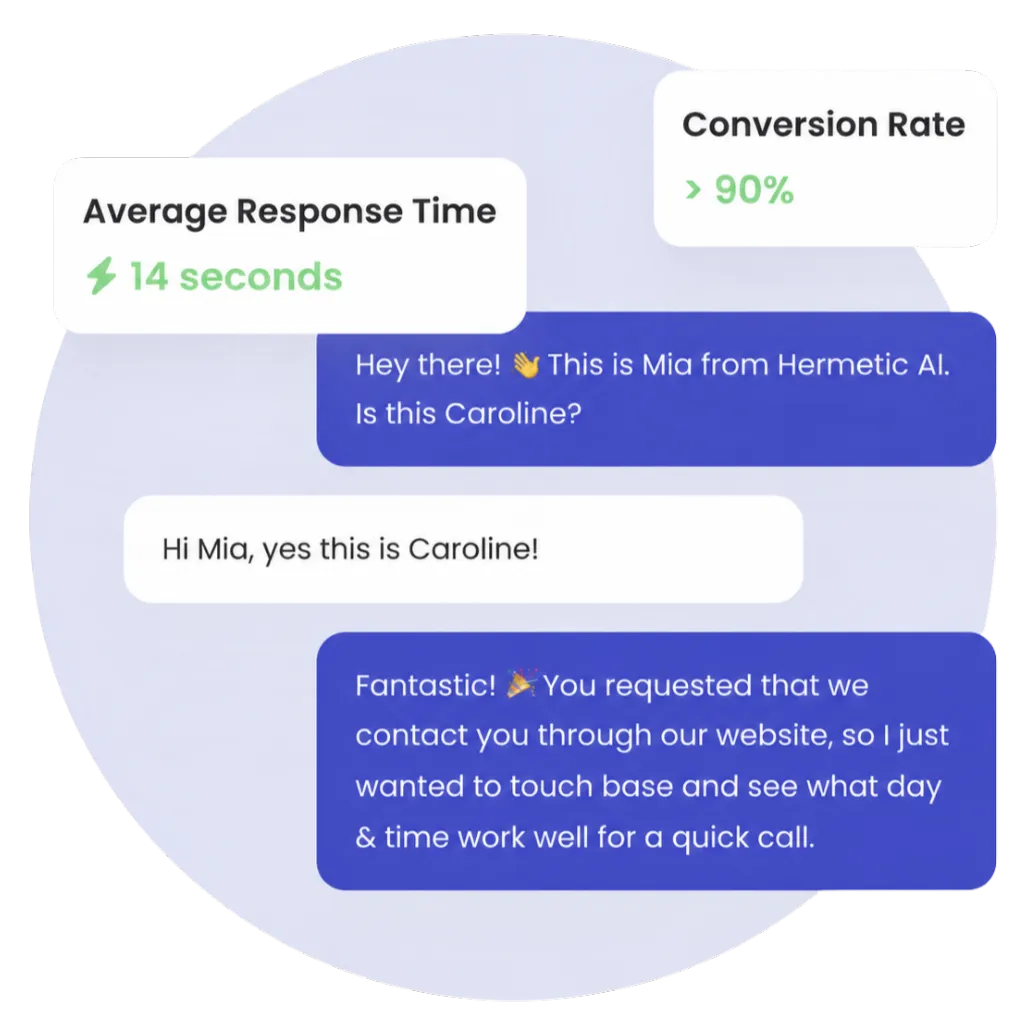
Mia reads for that and adjusts. The corporate inquiry gets the specifics fast, in order, with a clear next step. The social inquiry gets a human tone, the right questions, and an invitation to come see the space.
Same venue. Same accurate information. Two conversations, because there are two buyers.
Personalization is not inserting a first name. It is knowing what someone is actually trying to accomplish and answering that.
One of your buyers wants to look competent. The other wants to feel understood. If you can only tell them apart after you have replied, you have already replied wrong.
This article is part of our guide to Hospitality Event Sales: how event leads work and how venues convert more of them.