A lead that reaches the wrong desk is a lead on a countdown. It sits in an inbox that nobody owns, gets forwarded twice, and by the time the right salesperson opens it, the guest has booked somewhere that answered.
The countdown is short. In our 2026 study, inquiries to multi-unit groups, where a routing step usually sits between the form and the seller, waited a median of 26.4 hours for a human reply, against 8.4 hours at single-location venues.
Every hour of that routing delay is expensive. The Lead Response Management Study led by MIT's Dr. James Oldroyd found the odds of reaching a lead fall more than tenfold within the first hour, and the odds of qualifying it fall 21 times between the fifth minute and the thirtieth.
Lead routing is the unglamorous middle of event sales. It is also where a surprising share of revenue quietly dies. This is the complete guide to doing it with AI.
Routing is the decision between the inquiry and the human: who should own this lead, and what should they know when they get it? Traditional routing is a shared inbox and a prayer. AI routing reads the inquiry itself, event type, party size, date, location, and assigns it by rules you control, with the qualifying conversation already done.
The distinction that matters: routing is not just distribution. A routed lead should arrive warm, with date, headcount, and budget confirmed, and ideally with a tour already on the calendar. Distribution moves a name. Routing moves a conversation.
Leads rotate evenly across your sellers. Fair, simple, and right for teams where any seller can close any event. Its weakness is that it ignores fit: the wedding specialist gets the corporate buyout and vice versa.
Repeat clients and named accounts go to the person who owns the relationship. Essential once corporate business matters, because the fastest way to lose a repeat client is to make them re-explain themselves to a stranger.
Weddings to the wedding seller. Full buyouts to the director. Under-20 headcounts straight to a reservation link. This is where routing starts earning money, because matching the seller to the deal raises close rates on the deals that matter most.
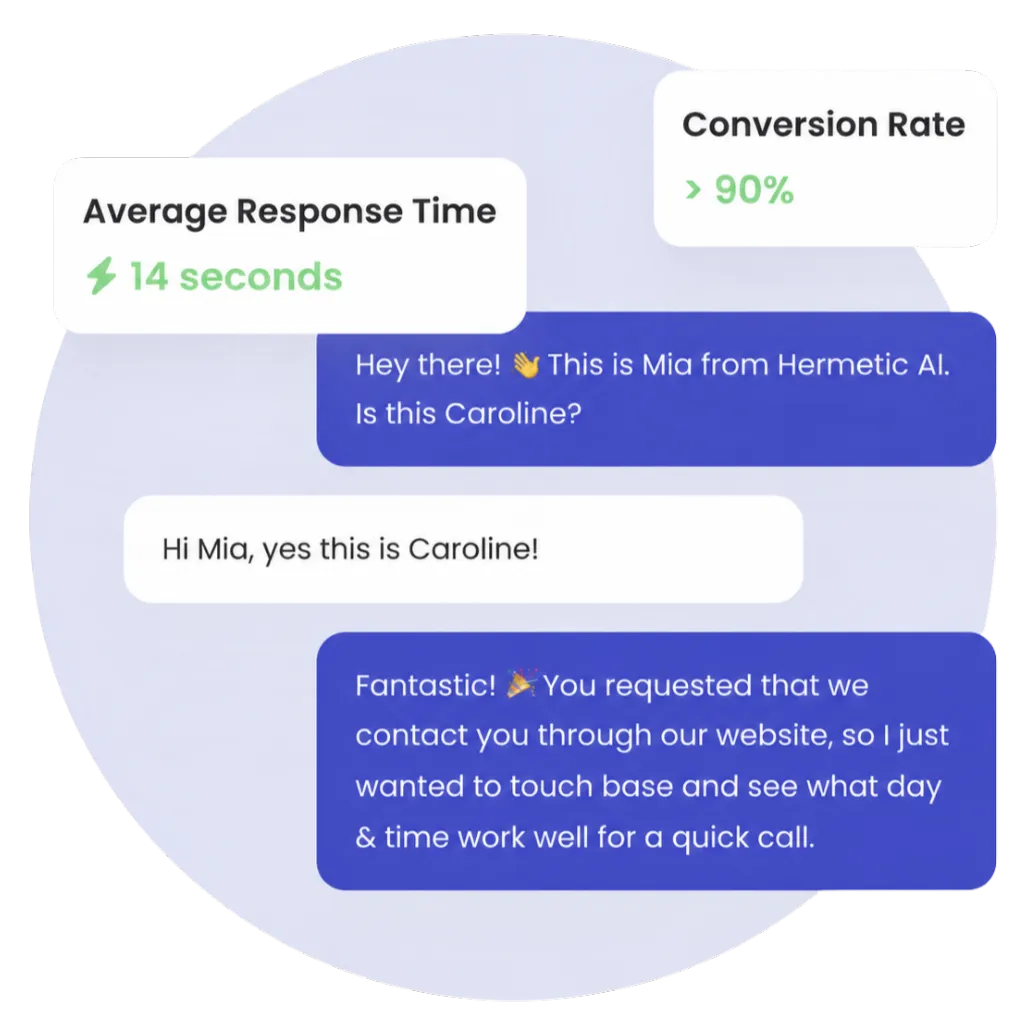
Most venues end up blending all three: rules first, accounts respected, round robin as the tiebreaker. Mia's lead routing supports exactly that stack.
One location is a routing problem. Ten locations are a switchboard. Each venue has its own calendar, minimums, and sellers, and a guest who asks the downtown location for a date it cannot host should be offered the sister property, not a dead end. The multi-location pattern that works: each location keeps its own rules and knowledge, with a layer above that can redirect a lead between venues when it helps the guest. Every location's manager sees their own pipeline and only theirs.
Automate the instant reply, the qualifying questions, the assignment decision, and the notification with full context. Keep human the moment that needs judgment: the VIP whose name your GM knows, the complicated multi-space buyout, the client who asks a question the knowledge base cannot answer. Good routing includes a handoff line, and deciding where to draw it matters more than the technology.
Three numbers tell the story. Time from inquiry to first reply, which should be seconds. Time from inquiry to the right owner, which should be minutes. And the share of leads that get a same-day human touch after qualification. When those three move, close rates follow. A Boston restaurant group put this end-to-end flow in place and event conversions rose 170%, worth $321K in added event revenue.
Speed gets the guest's attention. Routing decides whether the right person keeps it.
The right lead in the wrong hands is still a lost lead.
This article is part of our guide to AI Lead Qualification: how AI agents qualify, route, and convert inbound leads.