For more than a decade, sales teams have benchmarked themselves on "speed to lead" — the time from inquiry to first response. It became gospel. It generated entire categories of software. It is, today, the wrong metric. It has been the wrong metric for years.
The problem with speed to lead is that it measures the wrong thing. A fast generic reply is no better than a slow one. The acknowledgement email at minute three that says "thanks, someone will be in touch" is, from the guest's perspective, indistinguishable from no reply at all. The guest is not waiting for an acknowledgment. The guest is waiting for an answer.
It is also the norm. In our 2026 study of 807 inquiries, 84 percent of venues sent an automated confirmation, and the median wait for an actual human reply was still 23.6 hours.
The original research never confused the two either. When Harvard Business Review measured lead response across 2,241 companies, it defined a qualified lead as having a meaningful conversation with a key decision maker. Not a reply. A conversation.
The metric that matters is speed to confirmation — the time from inquiry to a meaningful next step. A booked tour. A held date. A signed deposit. A tasting on the calendar. The thing that, when it happens, takes the inquiry off the guest's mental list of "venues I'm still waiting to hear from."
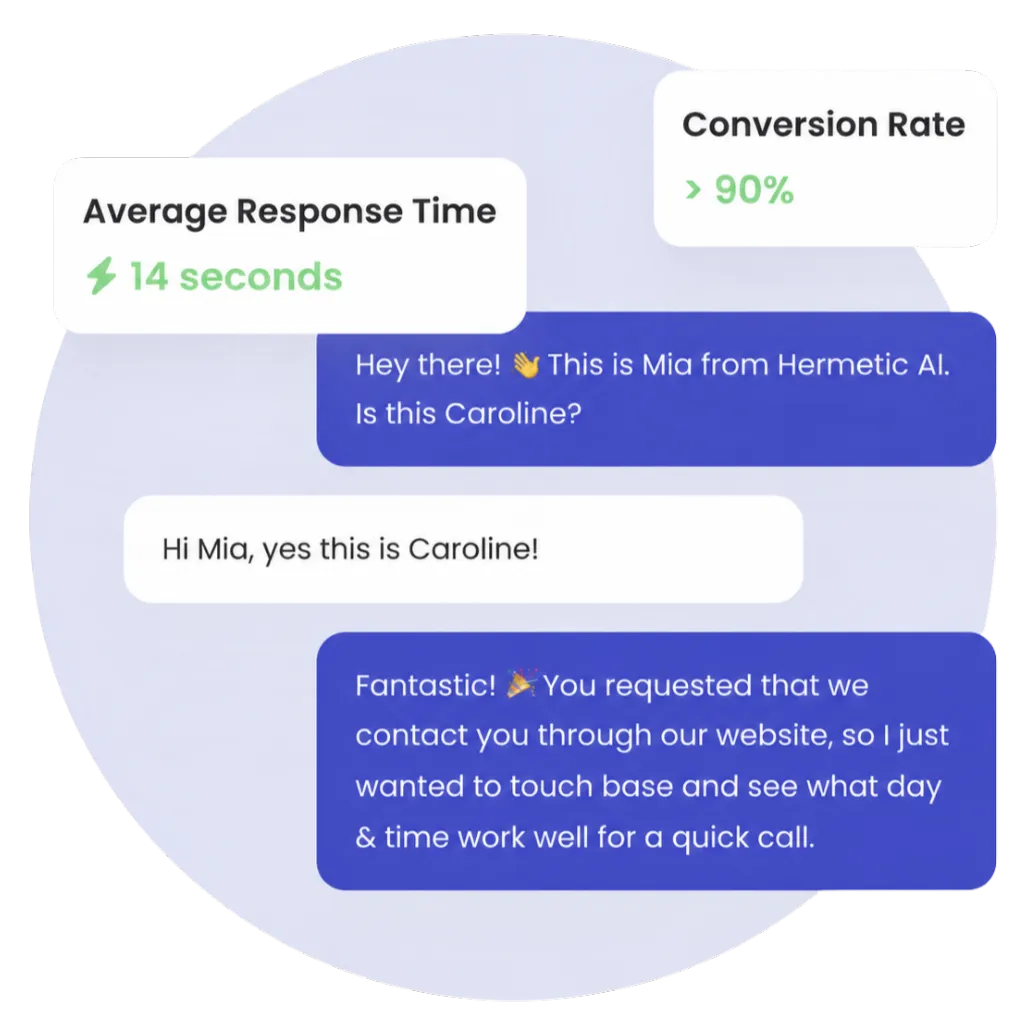
Speed to confirmation is harder to measure and harder to optimize. It requires AI that does not just reply, but progresses the conversation — gathers what is needed, offers options, books time, holds dates. Mia is built for that. The replies are fast. They are also useful.
The difference, for an operator, is the difference between an inbox that looks empty and a calendar that looks full. The first does not pay the bills. The second does.
If you are still benchmarking your venue on speed to lead, you are measuring how fast you say hello. You should be measuring how fast you say yes.
This article is part of our guide to Speed to Lead: benchmarks, statistics, and why response time decides who wins.